- Home
- The Embassy
- Consular Services
- Citizens Corner
- Bilateral Relations
- Business / Investment
- Media Room
- Tagore Nizami Library
- Useful Links
- Advisories
- Contact
Speeches & Interviews
Ayurveda: India’s Ancient Science of Life for a Healthier World
September 22, 2026
Ayurveda: India’s Ancient Science of Life for a Healthier World
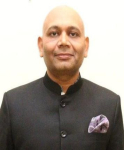
By Ambassador Abhay Kumar
Ambassador of India to Azerbaijan
An Ancient Indian Science Rooted in the Knowledge of Life
Long before modern hospitals, laboratories and pharmaceutical industries emerged, ancient India had developed a sophisticated understanding of health, disease, diet, human physiology and the relationship between the individual and the natural world. This knowledge evolved into Ayurveda, literally meaning the “knowledge of life” (Ayus – life and Veda – knowledge). Its foundations are reflected in India’s ancient intellectual and medical traditions and were systematised over centuries through texts such as the Charaka Samhita and Sushruta Samhita, which addressed internal medicine, surgery, nutrition, preventive healthcare, diagnosis and the maintenance of health.
Ayurveda was never conceived merely as a method of treating disease. It approached health as a state of balance involving the body, mind, diet, environment and daily conduct. This holistic approach is increasingly relevant to contemporary discussions on preventive and personalised healthcare. Importantly, Ayurveda is today not limited to traditional knowledge: India has established dedicated institutions and research programmes to investigate Ayurvedic medicines and practices using contemporary scientific methods. The Ministry of Ayush maintains an Ayush Research Portal containing curated research and evidence from studies on Ayurveda and other Indian systems of medicine. The World Health Organization has also developed benchmarks for Ayurveda practice and training, specifically addressing quality, safety, regulation and practitioner competence.
Scientific research is continuing to examine individual Ayurvedic formulations, medicinal plants, dietary practices and therapeutic approaches. For instance, a systematic review and meta-analysis covering 199 randomised controlled trials involving more than 21,000 participants reported evidence of improvements in measures of glycaemic control for several Ayurvedic interventions in people with type 2 diabetes, while also noting limitations in the quality and reporting of some studies and the need for better-designed clinical trials. Thus, the contemporary approach is not to place Ayurveda and modern medicine in opposition, but to subject Ayurvedic interventions to rigorous research and integrate those that demonstrate safety and effectiveness into appropriate healthcare settings.
From Ancient India to the World
Over the centuries, Ayurveda developed into an extensive knowledge system encompassing medicine, surgery, nutrition, pharmacology, preventive healthcare and healthy living. Its influence travelled beyond the Indian subcontinent through intellectual, commercial and cultural exchanges. Knowledge of Indian medicinal plants and therapeutic traditions interacted with medical traditions across Asia and beyond, while scholars, travellers and students helped transmit Indian knowledge across geographical boundaries.
This spirit of sharing remains an important characteristic of Ayurveda. Its knowledge was recorded in texts, taught through institutions and transmitted through generations rather than being guarded as an exclusive or secret tradition. India’s approach has consistently been to share its knowledge for the wider benefit of humanity. This philosophy resonates deeply with the Indian civilisational ideal of “Vasudhaiva Kutumbakam” – the world is one family.
In the contemporary era, Ayurveda’s international reach has expanded considerably. The establishment of the WHO Global Centre for Traditional Medicine in Jamnagar, India, represents an important recognition of the growing global interest in traditional medicine and the need for scientific research, evidence, standards and responsible integration.
Why Ayurveda Matters in the Modern Age
The relevance of Ayurveda is particularly evident at a time when societies across the world are confronting rising lifestyle-related disorders, sedentary habits, stress, poor dietary patterns and increasing exposure to highly processed foods. Modern healthcare has made extraordinary advances and remains indispensable for acute, infectious, surgical and life-threatening conditions. At the same time, there is growing interest in preventive healthcare and approaches that address diet, sleep, physical activity, stress management and long-term wellbeing.
Ayurveda places these factors at the centre of its philosophy. Rather than waiting for illness to develop, it emphasises maintaining balance through appropriate food, daily routines, physical activity, sleep, mental wellbeing and responsible use of medicinal preparations. Its emphasis on plants, herbs, spices, oils and other natural materials also reflects a close relationship with nature.
At the same time, it is important to distinguish Ayurveda’s traditional use of natural substances from the assumption that every natural product is automatically harmless. Like conventional medicines, Ayurvedic preparations must be properly identified, manufactured, dosed and prescribed. WHO notes that Ayurvedic medicines can cause adverse effects when contaminated, adulterated, incorrectly identified or improperly used, and therefore stresses quality control and patient safety. This makes modern research, standardisation and qualified professional supervision essential.
Ayurveda can have a role across a wide spectrum of health needs—from supporting healthy digestion, sleep, stress management and general wellbeing to complementary approaches for chronic conditions. Research into areas such as type 2 diabetes has produced promising findings, although the strength of evidence varies between individual interventions and more high-quality clinical research remains necessary. For common ailments such as seasonal coughs and colds, Ayurvedic traditions have long used dietary, herbal and lifestyle approaches, while serious or persistent symptoms should always receive appropriate medical evaluation.
Ayurveda and Yoga: A Holistic Partnership
The benefits of Ayurveda can be complemented by Yoga, another of India’s ancient knowledge traditions. While Ayurveda provides a framework for health, nutrition, daily routines and therapeutic care, Yoga contributes physical movement, breathing practices, concentration and mental balance. Together, they offer a holistic approach to wellbeing that addresses the interconnected dimensions of body and mind.
The global popularity of Yoga demonstrates the continuing relevance of Indian approaches to preventive health. The Government of India has also promoted the scientific study and responsible global dissemination of Yoga and Ayurveda as complementary components of holistic wellbeing.
Ayurveda in Azerbaijan
Ayurveda is increasingly accessible in Azerbaijan as well. At the Shabran Wellness Resort, Ayurveda-based wellness services are available with therapists and doctors from India. Ayurveda is also available at the Sri Sri Tattva centre in Baku, where Indian doctors and specialists contribute to the provision of Ayurvedic and wellness services.
For people interested in experiencing Ayurveda, such centres provide an opportunity to explore Indian approaches to nutrition, wellness, therapies and preventive health closer to home, while also learning about the philosophy that lies behind the treatments.
India’s Renewed Commitment to Ayurveda
The global resurgence of interest in Ayurveda has received strong support from Prime Minister Narendra Modi and the Government of India. Under his leadership, India established the Ministry of Ayush, strengthened institutions dedicated to Ayurveda, promoted research and quality standards, expanded international cooperation and supported the globalisation of Indian traditional medicine. The National AYUSH Mission has sought to strengthen AYUSH healthcare services, education, quality control and the sustainable availability of medicinal raw materials.
India has also worked closely with the WHO on traditional medicine, including through the Global Centre for Traditional Medicine in Jamnagar. More recently, initiatives such as the Ayush Mark, intended as a global benchmark for quality of AYUSH products and services, and the My Ayush Integrated Services Portal have further strengthened efforts towards quality, standardisation and global accessibility.
Recognising the growing interest of international patients in Indian systems of medicine, the Government of India introduced a dedicated Ayush Visa (AY) category in August 2023 for foreign nationals seeking treatment under Ayurveda and other Indian systems of medicine. The initiative is intended to facilitate medical-value travel to India and make its traditional healthcare systems more accessible internationally.
A Living Heritage for the Future
Ayurveda has survived and evolved across thousands of years because it is more than a collection of medicines—it is a philosophy of living in harmony with the body, mind, community and nature. It represents an important part of India’s civilisational heritage and its long tradition of observing, documenting and sharing knowledge about human wellbeing.
In an age increasingly focused on preventive healthcare, sustainable living and holistic wellbeing, Ayurveda offers a distinctive perspective: health is not simply the absence of disease, but a continuing state of balance. India’s effort today is to preserve this ancient wisdom while subjecting it to modern scientific research, quality standards and responsible practice, so that its potential benefits can be shared with the world in the spirit of Vasudhaiva Kutumbakam – the world is one family.
As the world celebrates 11th Ayurveda Day on 23rd September, the Embassy of India is organizing the Great Indian Ayurveda Festival to mark this occasion featuring Ayurveda expert talks, free medical consultations, displays and sale of authentic Ayurvedic products, Ayurvedic food, interactive sessions on traditional wellness practices and cultural performances showcasing Indian music and dance.
******