
- Home
- The Embassy
- Consular Services
- Citizens Corner
- Bilateral Relations
- Business / Investment
- Media Room
- Tagore Nizami Library
- Useful Links
- Advisories
- Contact
Speeches & Interviews
India at 80: A Journey of Transformation, Partnership and Civilisational Confidence
August 15, 2026
India at 80: A Journey of Transformation, Partnership and Civilisational Confidence
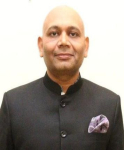
By H.E. Shri Abhay Kumar, Ambassador of India to Azerbaijan
On August 15, 2026, India celebrates the 80th anniversary of its Independence — a moment of immense pride for 1.4 billion Indians and for friends of India across the world. For me, as India’s Ambassador to Azerbaijan, this occasion is also an opportunity to reflect on India’s remarkable journey and on the enduring friendship between the peoples of India and Azerbaijan, a relationship rooted in history, enriched by culture and increasingly shaped by contemporary cooperation.
Eight decades after Independence, India stands as a confident, dynamic and globally engaged nation. From a newly independent country confronting poverty, illiteracy and developmental challenges, India has emerged as one of the world’s major economies, a leading technological power, a vibrant democracy and an increasingly important voice in shaping the global agenda.
From Freedom to a New India
When India became independent in 1947, the challenges before the young nation were immense. Poverty was widespread, infrastructure was limited and millions lacked access to education, healthcare and basic amenities. Yet, India chose the path of democracy, pluralism, constitutionalism and inclusive development.
The journey has been neither linear nor easy. It has been sustained by the resilience and aspirations of generations of Indians. India’s democratic institutions have endured through decades of profound social and economic transformation. Elections involving hundreds of millions of citizens have become one of the defining features of the world’s largest democracy.
Today, India is among the world’s fastest-growing major economies. Its transformation has been accompanied by significant progress in infrastructure, manufacturing, services, agriculture, financial inclusion and digital connectivity. India’s economic story is increasingly one of opportunity, innovation and entrepreneurship.
One of the most remarkable changes has been the expansion of the Indian middle class and the creation of new opportunities for young Indians. A country that once struggled to feed itself is today a major producer and exporter of food, pharmaceuticals, automobiles, information technology and a wide range of manufactured goods.
Building the Foundations of Growth
India’s transformation is visible in its infrastructure. Modern highways, dedicated freight corridors, expanded airports, ports, metro rail systems and new logistics networks are connecting cities, towns and villages at an unprecedented pace.
The transformation is equally visible in the digital sphere. India has created one of the world’s largest digital public infrastructures, bringing millions of people into the formal financial system. Digital payments, Aadhaar-based identity infrastructure and the Unified Payments Interface have fundamentally changed the way Indians access services, conduct transactions and participate in the economy.
This digital transformation is not merely about technology. It is about inclusion.
A small entrepreneur in a village can now receive digital payments from a customer thousands of kilometres away. A farmer can access information and financial services through a mobile phone. A student can access educational resources online. Technology is increasingly becoming an instrument for expanding opportunity.
From the Green Revolution to a Knowledge Economy
India’s development story is also a story of scientific achievement.
The Green Revolution helped India overcome food insecurity. The expansion of higher education created generations of scientists, engineers, doctors and professionals who contributed to India’s development and to the global knowledge economy.
Today, India is a major centre for information technology, pharmaceuticals, biotechnology, space research and advanced manufacturing. Indian scientists and entrepreneurs are working at the frontiers of artificial intelligence, quantum technologies, semiconductors, biotechnology, renewable energy and space exploration.
India’s space programme, once developed with modest resources, has become a source of national pride and international admiration. The successful Chandrayaan missions, the Mars Orbiter Mission and the Aditya-L1 solar mission demonstrate India’s growing capabilities in space science and technology.
India’s space journey is particularly inspiring because it reflects a larger national philosophy: technology must ultimately serve society.
Innovation with Inclusion
India’s technological transformation is accompanied by a strong emphasis on inclusion.
Government programmes have expanded access to banking, insurance, housing, sanitation, clean cooking fuel, electricity, drinking water and healthcare. The expansion of digital public services has helped connect citizens with the state in ways that were difficult to imagine only a generation ago.
India’s experience demonstrates that development and innovation need not be confined to a small section of society. Technology can become a powerful instrument of social transformation when it is designed to be accessible, affordable and inclusive.
This philosophy is reflected in India’s approach to development partnerships as well. India has shared its expertise, training and capacity-building experience with developing countries through programmes such as the Indian Technical and Economic Cooperation (ITEC) programme. More than 230 Azerbaijani scholars had benefited from ITEC courses by December 2024, while more than 200 participated in e-ITEC programmes during the pandemic period.
A Responsible Partner to the World
India’s transformation has taken place alongside a profound expansion of its global engagement.
India today is an active participant in the major international institutions and forums and is committed to a multipolar, inclusive and representative international order. India’s foreign policy is guided by the conviction that the interests of humanity are best served through dialogue, cooperation and respect for national sovereignty and diversity.
The principle of Vasudhaiva Kutumbakam — the world is one family — has long been part of India’s civilisational outlook. During the COVID-19 pandemic, India supplied vaccines and medicines to partner countries under the Vaccine Maitri initiative, demonstrating that international solidarity can save lives.
India has also emerged as an important partner in addressing global challenges such as climate change, food and energy security, disaster resilience, healthcare and sustainable development.
The International Solar Alliance, launched jointly by India and France, reflects India’s commitment to making clean energy more accessible. India’s own rapid expansion of renewable energy demonstrates that economic growth and environmental responsibility can advance together.
The Power of India's Young People
Perhaps the greatest strength of India’s future lies in its people.
India has one of the world’s largest young populations. Its universities, research institutions, start-up ecosystem and expanding innovation economy are producing a new generation of entrepreneurs, scientists, artists and professionals.
Indian start-ups have transformed sectors ranging from digital commerce and financial technology to healthcare, education, mobility and agriculture. India’s young entrepreneurs are increasingly building companies that serve not only the Indian market but the world.
The India of 1947 inherited a difficult development challenge. The India of 2026 is increasingly defined by ambition — an ambition to become a developed country, to expand opportunity and to contribute solutions to global challenges.
India and Azerbaijan: A Friendship Beyond Geography
For India, the story of transformation is also inseparable from its relationships with countries and peoples across the world. Azerbaijan occupies a special place in this story because the relationship between our two peoples predates the modern diplomatic relationship by centuries.
India and Azerbaijan share civilisational linkages, cultural affinities and a long history of interaction. One of the most visible reminders of this connection stands near Baku: the historic Ateshgah fire temple.
The monument, with its Devanagari and Gurmukhi inscriptions and Indian religious symbols, bears testimony to the presence of Indian merchants and communities who travelled across the historic trade routes linking the Indian subcontinent with the Caspian region. The temple is more than a monument; it is a reminder that people, ideas, traditions and commerce travelled across geographical distances long before the age of modern connectivity.
Our literary connections are equally fascinating. The great Azerbaijani poet Nizami Ganjavi became known and admired in India over the centuries. His literary legacy influenced eminent Indian poets, including Amir Khusrau. A portrait of Nizami hangs in Rashtrapati Bhavan in New Delhi, while a folio of his Layla and Majnun is preserved at Humayun’s Tomb.
Rabindranath Tagore, India’s first Nobel laureate, also has a special connection with Azerbaijan. He travelled to Azerbaijan during the Soviet period, and his legacy continues to resonate in the country. In 2011, Azerbaijan celebrated the 150th birth anniversary of Tagore at the Nizami Institute of Literature in Baku. His works have also been translated into Azerbaijani and are available in Azerbaijani libraries.
From Raj Kapoor to Bollywood and Yoga
Cultural connections have continued to evolve with every generation.
The friendship between the legendary Azerbaijani singer and actor Rashid Behbudov and the iconic Indian actor Raj Kapoor is a particularly cherished chapter in the cultural relationship between our two countries. Azerbaijani artists such as Behbudov and Elmira Rahimova helped create bridges between Indian and Azerbaijani music and artistic traditions.
Indian cinema subsequently became one of the most visible bridges between our societies. Raj Kapoor’s films created an enduring emotional connection with Azerbaijani audiences, and generations later Bollywood continues to enjoy remarkable popularity. Indian films, music and dance remain familiar to Azerbaijani audiences, while Azerbaijan itself has increasingly become a popular location for Indian film productions.
Yoga represents another contemporary expression of this cultural affinity. What began in ancient India as a holistic discipline of physical, mental and spiritual well-being has today found enthusiastic practitioners around the world, including in Azerbaijan. The growing participation in International Day of Yoga programmes is a reflection of the people-to-people warmth between our two countries.
The relationship is also expanding into new areas of cultural engagement. In 2026, the Embassy of India launched Baku Evenings, a cultural series bringing Indian cinema, literature, arts, heritage and other aspects of Indian culture closer to Azerbaijani audiences. Bharat Filmotsav, launched as part of the series, celebrates the enduring appeal of Indian cinema.
Looking Ahead Together
The India-Azerbaijan relationship has today acquired a contemporary dimension alongside its civilisational foundations. Trade, investment, energy, tourism, education, technology and connectivity offer considerable opportunities for expanding bilateral cooperation.
India’s energy engagement with Azerbaijan has been significant, including the investments of ONGC Videsh Limited in the Azeri-Chirag-Gunashli oil fields and the Baku-Tbilisi-Ceyhan pipeline. At the same time, new opportunities are emerging in pharmaceuticals, agriculture, food processing, information technology, renewable energy, tourism and other sectors.
Tourism is another powerful bridge. In 2025, Azerbaijan welcomed more than 166,000 Indian visitors, making India its fourth-largest source of tourists overall and its largest source among non-neighbouring countries. Direct air connectivity between our countries has further strengthened these people-to-people links.
India and Azerbaijan: A Shared Journey Across Centuries
As India enters its 80th year of Independence, it is worth remembering that the India-Azerbaijan relationship did not begin with the establishment of diplomatic relations in 1992. Its roots lie much deeper — in the movement of merchants across ancient trade routes, in the flames of Ateshgah, in the verses of Nizami Ganjavi and Amir Khusrau, in the universal humanism of Tagore, and in the enduring cultural exchanges that have continued across generations. The relationship found new expressions in the friendship between Rashid Behbudov and Raj Kapoor, in the popularity of Indian cinema and music, in Azerbaijani artists learning Indian traditions, and today in the growing enthusiasm for Bollywood, Indian cuisine and Yoga.
India and Azerbaijan have travelled a long way together — from the caravan routes of the past to the air routes, digital connections and economic partnerships of the present. Our shared history reminds us that geography need not divide civilizations; it can instead become a bridge between them. As India looks towards its next decades with confidence and Azerbaijan continues its own journey of transformation, there is enormous potential to write new chapters in this story of friendship. The Embassy of India in Baku remains committed to strengthening these bonds and bringing our peoples closer, so that the civilisational bridges built over centuries may become even stronger in the decades ahead.
**Jai Hind! **